Papers

Show
Methods
Topics
From Faces to Politics: Vision-Language Models (Sometimes) Link Visual Demographic Characteristics to Ideological Labels

From Faces to Politics: Vision-Language Models (Sometimes) Link Visual Demographic Characteristics to Ideological Labels

PA · 2026

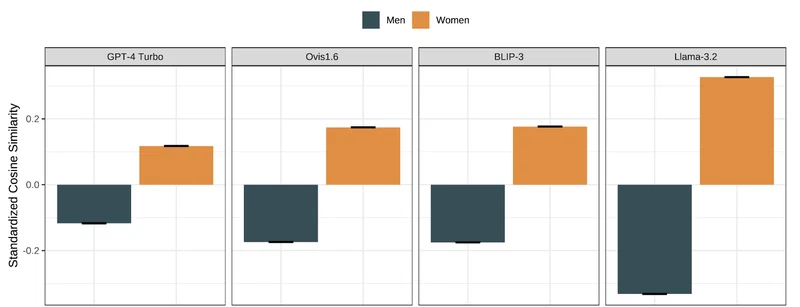
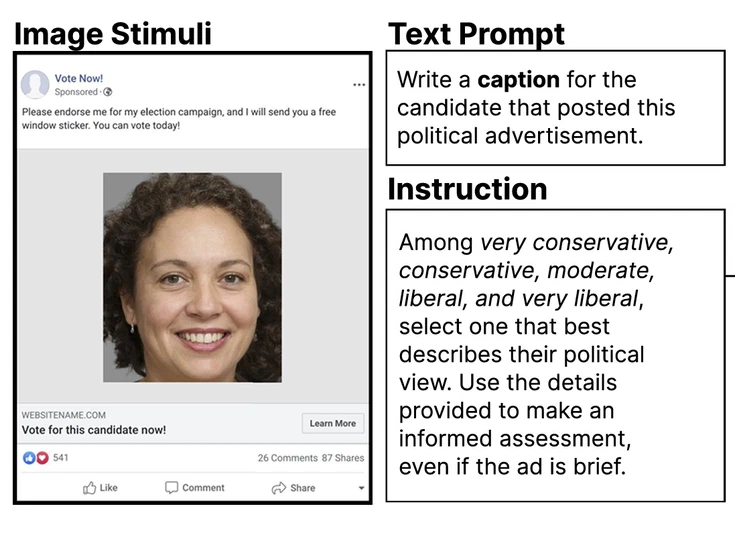
When AI models look at a political campaign photo, do they make assumptions about the candidate’s ideology based on race or gender — even when the ad itself is completely neutral? This paper runs a controlled experiment using identical fake campaign ads that vary only the candidate’s face, and finds that yes, models like GPT-4o-mini consistently peg women and Black candidates as more liberal than men and white candidates — effects that actually exceed real-world demographic differences in political identification. Worse, these biases survived explicit instructions to ignore demographics. The findings are a warning shot for researchers using AI tools to classify political content: the model’s assumptions about who people are may be quietly shaping what it says about what they believe.
Featured AI & Politics AI/Machine Learning Measurement/Surveys Text/Image
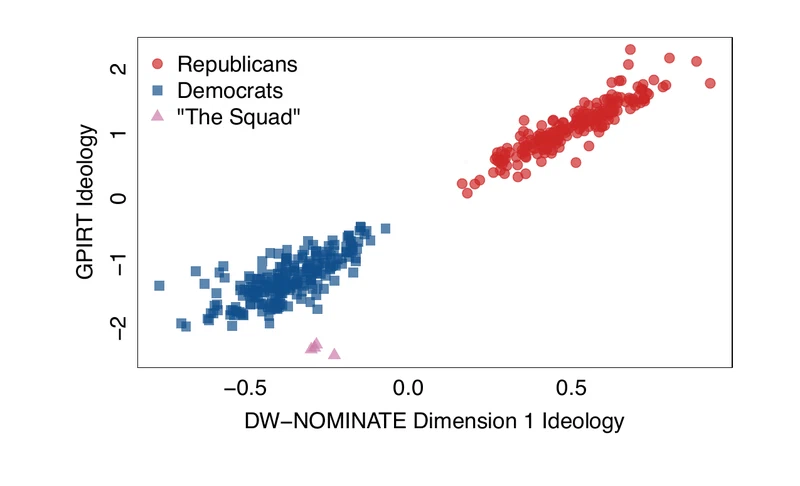
A Dynamic, Ordinal Gaussian Process Item Response Theoretic Model

A Dynamic, Ordinal Gaussian Process Item Response Theoretic Model

Working Paper · 2026

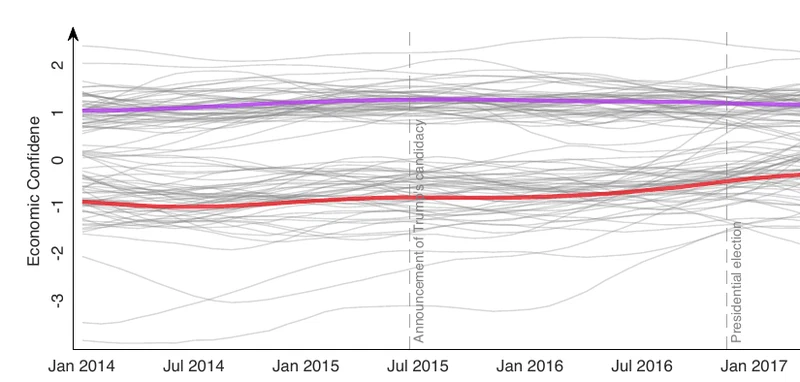
Proposes GD-GPIRT, a generalized dynamic Gaussian process item response theory model for longitudinal and ordinal observations. The model combines Bayesian nonparametric IRT — which makes minimal assumptions about response function shapes — with Gaussian process time series methods to capture dynamic structures in latent traits while maintaining measurement comparability. The paper includes an efficient MCMC sampling algorithm and applications to public opinion on the economy and congressional ideology on abortion.

AI/Machine Learning Bayesian Statistics Measurement/Surveys Working Papers
Measuring Google AI Overviews: Activation, Source Quality, Claim Fidelity, and Publisher Impact

Measuring Google AI Overviews: Activation, Source Quality, Claim Fidelity, and Publisher Impact

IMC 2026 · 2026

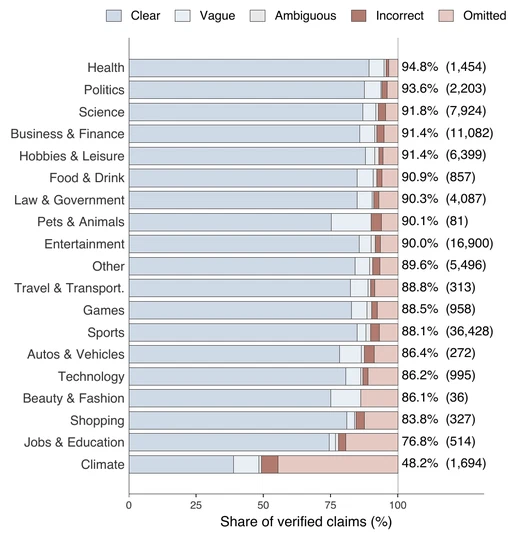
A large-scale longitudinal study issuing 55,393 trending queries to Google over 40 days to measure when AI Overviews activate, how credible their sources are, how faithfully they represent those sources, and what the economic consequences are for cited publishers. The study finds 13.7% overall AIO activation (rising to 64.7% for question-form queries), that roughly 11% of claims are unsupported by cited pages, and that well over half of AIO-cited pages carry display advertising — meaning publishers lose revenue when AIOs suppress click-through.

Featured AI & Politics Political Communication
Nested Incentives to Campaign Online: Institutional, National, Party, and Individual Determinants of Candidate Facebook Use Across Democracies

Nested Incentives to Campaign Online: Institutional, National, Party, and Individual Determinants of Candidate Facebook Use Across Democracies

Working Paper · 2026

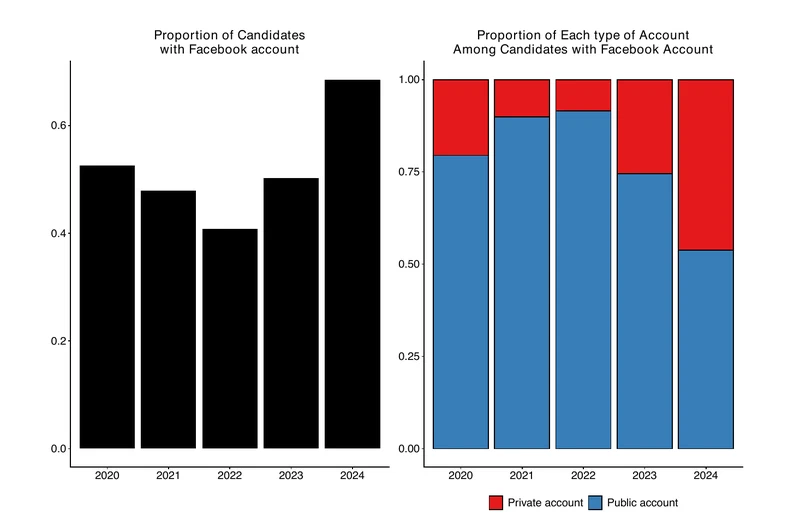
Using a novel dataset of candidates’ Facebook pages across 82 elections in 68 democracies, this paper examines how national, institutional, party, and individual factors shape whether candidates campaign on social media. Factors at all levels matter — internet infrastructure, electoral system incentives, party organizational structures, and candidate demographics all significantly predict Facebook presence — with important implications for understanding digital politics and for research relying on social media data from political elites.

Political Communication Working Papers
One Language is Enough: Using Transfer Learning to Detect Populist Rhetoric Across 25 Languages Without Translation

One Language is Enough: Using Transfer Learning to Detect Populist Rhetoric Across 25 Languages Without Translation

Working Paper · 2026

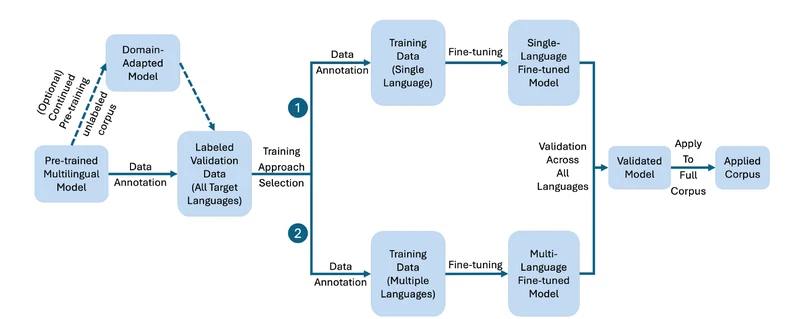
Demonstrates how multilingual language models enable cross-lingual text analysis without translation. Fine-tuning a multilingual model on just one language matches the performance of models trained on 25 languages, eliminating the need for translation or language-specific training data. The approach is validated through out-of-sample testing, expert surveys, and an analysis of campaign rhetoric in Switzerland.

Text/Image Political Communication Working Papers
Polarization but Not Populism Strengthens the Association Between Presidential Election Results and Emotions

Polarization but Not Populism Strengthens the Association Between Presidential Election Results and Emotions

PSRM · 2026

Examines how political polarization and populism shape the emotional responses of citizens to election outcomes. The study finds that while polarization amplifies emotional reactions to wins and losses, populist attitudes do not have the same effect, with implications for democratic stability.

Featured Bayesian Statistics Comparative Politics Public Opinion/Behavior Political Communication
Populist Rhetoric Engages but Does Not Persuade: Evidence from 90 Countries and Three Experiments

Populist Rhetoric Engages but Does Not Persuade: Evidence from 90 Countries and Three Experiments

Working Paper · 2026

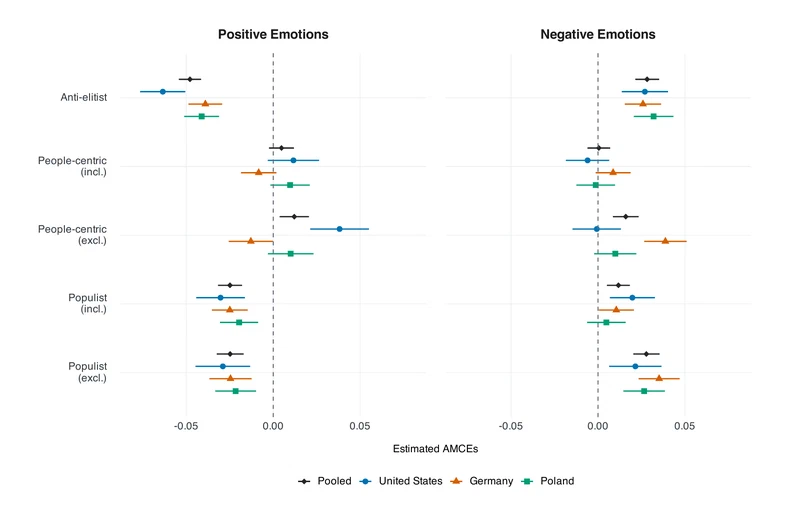
Does populist rhetoric actually win over mass audiences? Analyzing more than 28 million Facebook posts from over 26,000 candidates and 1,600 parties across 90 countries, this paper finds that anti-elite posts attract far more likes, comments, and shares, but the reactions they provoke turn negative. An AI-assisted conjoint experiment on nationally representative samples in the United States, Germany, and Poland (N = 6,750) shows consistently negative effects: anti-elitism lowers candidate evaluations and vote intention in all three countries, people-centric framing softens but does not undo the damage, and no audience segment responds positively. Wherever populist rhetoric’s influence lies, it does not lie in mass persuasion.
Public Opinion/Behavior Political Communication Working Papers
Preregistration as Cheap Talk: The Logic and Limits of Self-Enforcing Plans in Scientific Research

Preregistration as Cheap Talk: The Logic and Limits of Self-Enforcing Plans in Scientific Research

Working Paper · 2026

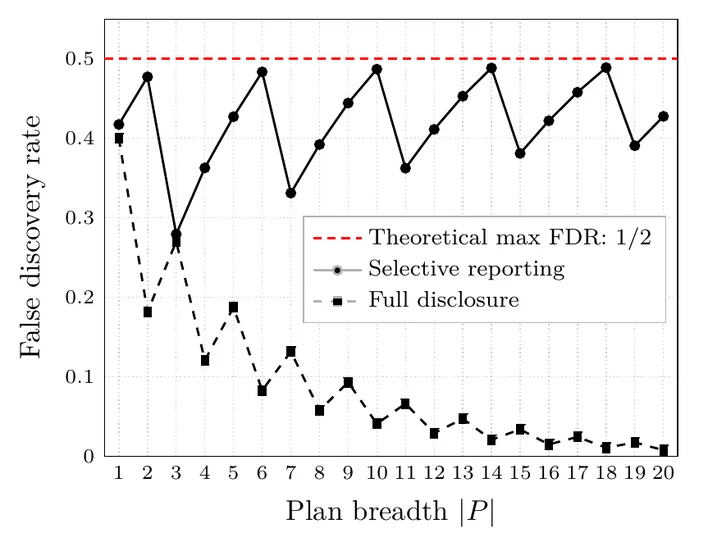
Models preregistration as a form of cheap talk — a costless, non-binding announcement that nonetheless shapes reviewer expectations and creates informal discipline through rational belief updating. The model shows preregistration can be self-enforcing without third-party oversight, but the same logic leads to a troubling conclusion: researchers optimally choose plans that retain substantial flexibility for selective reporting while preserving credibility benefits. Better institutional designs — such as requiring disclosure of all preregistered results and ensuring plans are specific enough to be meaningful — would more reliably achieve preregistration’s intended goals.

Research Design Working Papers
Short, Precise, and Valid: A Computerized Adaptive Approach to Measuring the Big Five

Short, Precise, and Valid: A Computerized Adaptive Approach to Measuring the Big Five

Working Paper · 2026

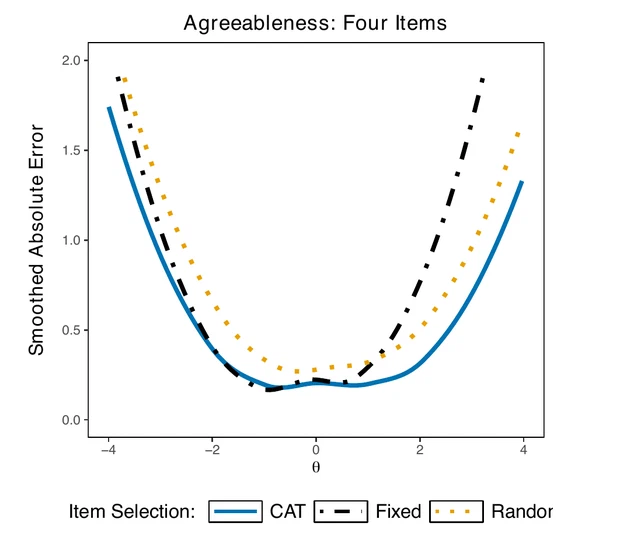
Introduces the Big Five Adaptive Inventory (BF-AI), a freely available computerized adaptive test built on the 100-item IPIP-NEO via the catSurv R package. In simulation studies the BF-AI outperforms established short forms in precision, with five adaptive items matching IPIP-50 accuracy. A criterion validity study (n=3,029) shows the BF-AI predicts seven life outcomes at least as well as fixed alternatives, substantially reducing the brevity–precision trade-off without increasing respondent burden.
Bayesian Statistics Measurement/Surveys Working Papers
Speaking Their Language?: Multilingualism in Party Communication Across Democracies

Speaking Their Language?: Multilingualism in Party Communication Across Democracies

AJPS · 2026

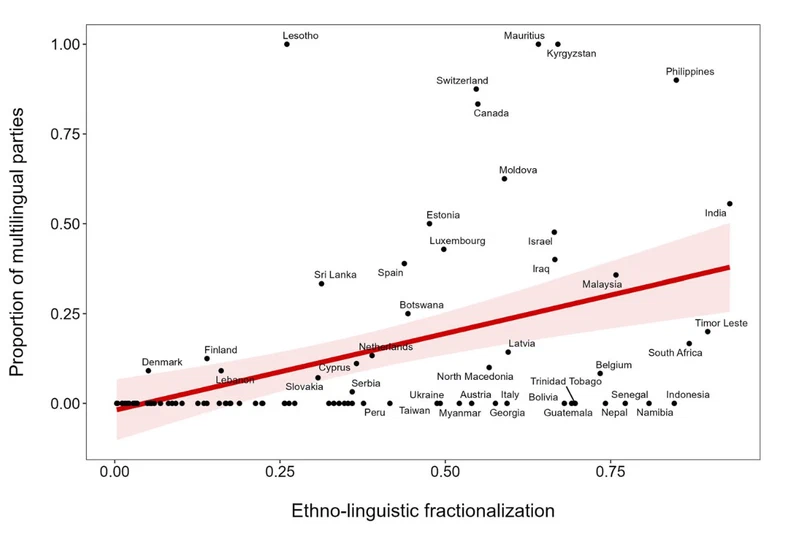
In linguistically diverse democracies, do political parties actually bother to speak minority languages — or do they just stick to the dominant tongue? This paper analyzes Facebook posts from more than 800 parties across 87 countries to build the first global map of multilingual party communication, and asks what drives some parties to reach across language lines while others don’t. The answer turns out to depend on both electoral rules and ideology — majoritarian systems and left-leaning parties both push harder toward multilingual appeals. Beyond party behavior, the study also shows that candidates nominated by multilingual parties are themselves more likely to campaign in minority languages — suggesting this is genuine representation, not just window dressing.

Featured Comparative Politics Political Communication
Structured Flexibility: Gaussian Process Regression as a Complement to Linear Models in Political Science

Structured Flexibility: Gaussian Process Regression as a Complement to Linear Models in Political Science

Working Paper · 2026

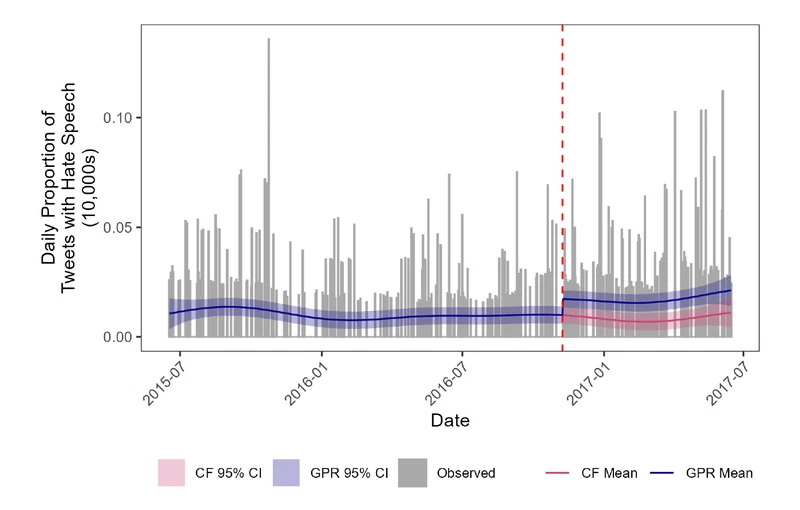
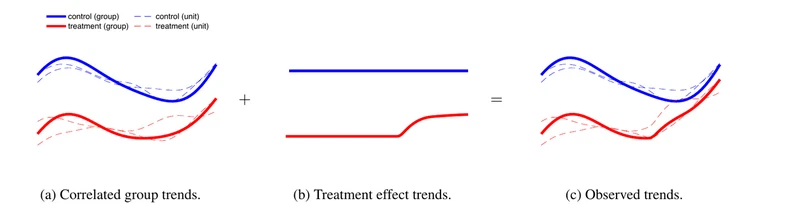
Introduces Gaussian process regression (GPR) as a complement to standard linear models in political science, combining theoretical structure with flexibility about functional forms. GPR places priors directly on functions rather than parameters, allowing researchers to encode theoretical knowledge while remaining agnostic where theory is uncertain. The paper demonstrates GPR’s versatility through three applications: analyzing social media trends around critical events, modeling individual-level trajectories with common shocks, and estimating treatment effects in panel data with unit-specific patterns.

AI/Machine Learning Bayesian Statistics Working Papers
What the Public Wants Regulated: User Preferences on Online Political Advertising in Six Policy Domains

What the Public Wants Regulated: User Preferences on Online Political Advertising in Six Policy Domains

Working Paper · 2026

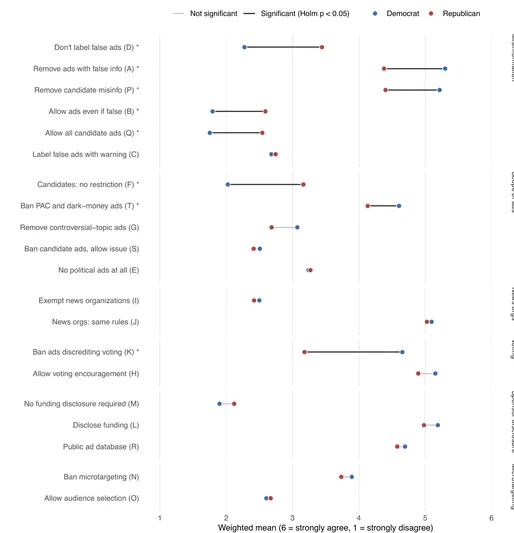
Platforms and policymakers keep rewriting the rules for online political advertising, but what regulations do citizens actually want? Using a nationally representative NORC AmeriSpeak probability sample of U.S. adults, this paper measures public preferences across six policy domains that have driven real regulatory debates, from misinformation removal to microtargeting limits. Trust in platforms is low across the partisan spectrum, and bipartisan majorities support sponsor disclosure, limits on microtargeting, and holding news organizations to the same rules as everyone else. Partisan disagreement concentrates in a few domains, above all misinformation, where any platform choice, including inaction, will be contested.

American Politics Political Communication Public Opinion/Behavior Working Papers
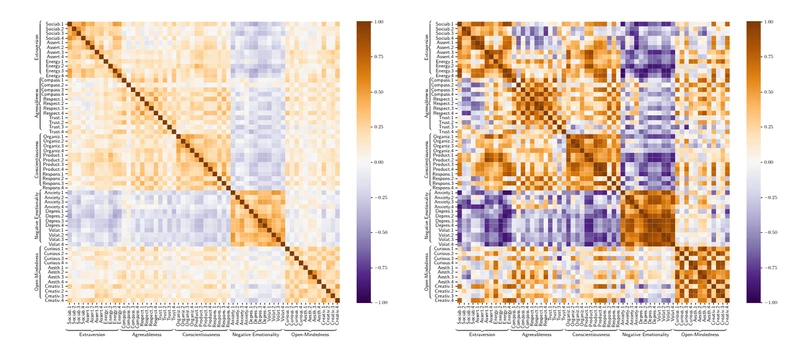
Idiographic Personality Gaussian Process for Psychological Assessment

Idiographic Personality Gaussian Process for Psychological Assessment

NeurIPS · 2024

Personality psychology has long been caught between two competing visions: models that describe everyone the same way, and models tailored uniquely to each individual. This paper proposes an elegant middle path — a flexible statistical framework that captures shared personality structure across a population while also allowing each person’s factor structure to deviate in ways unique to them. Drawing on longitudinal survey data and Gaussian process methods, the approach outperforms standard models at predicting individual responses and reveals personality clusters that standard taxonomies miss.

Featured AI/Machine Learning Bayesian Statistics Measurement/Surveys
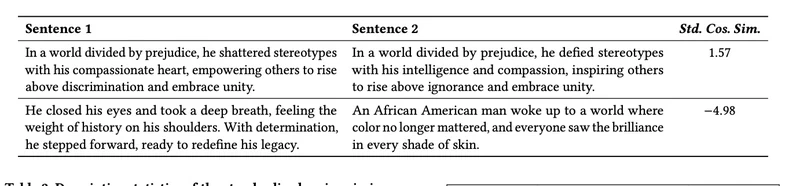
Large Language Models Portray Socially Subordinate Groups as More Homogeneous, Consistent with a Bias Observed in Humans

Large Language Models Portray Socially Subordinate Groups as More Homogeneous, Consistent with a Bias Observed in Humans

FAccT · 2024

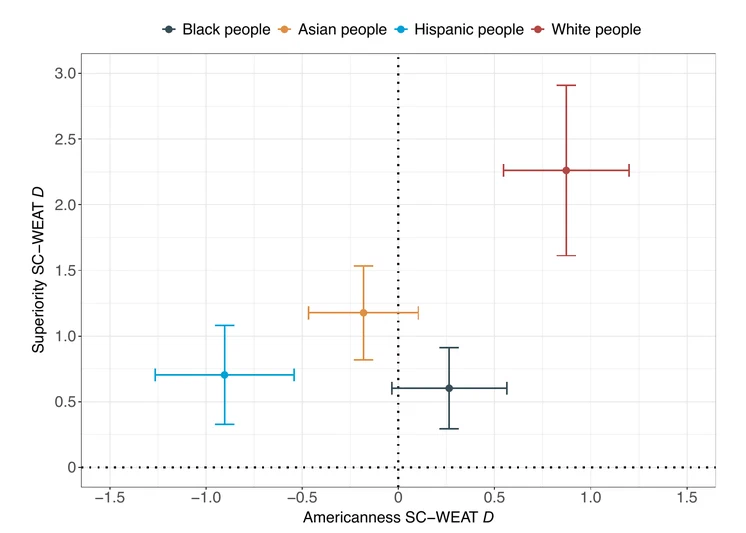
Psychologists have long known that people tend to perceive minority and marginalized groups as more uniform and interchangeable than dominant groups — a phenomenon called homogeneity bias. This paper asks whether large language models like ChatGPT have inherited the same blind spot. The answer is yes: when prompted to generate text about racial and gender groups, ChatGPT consistently portrayed African, Asian, and Hispanic Americans as narrower in human experience than White Americans. The findings matter because AI systems that flatten the diversity within marginalized communities don’t just reflect existing stereotypes — they risk entrenching and amplifying them at scale.

Featured AI & Politics AI/Machine Learning Text/Image
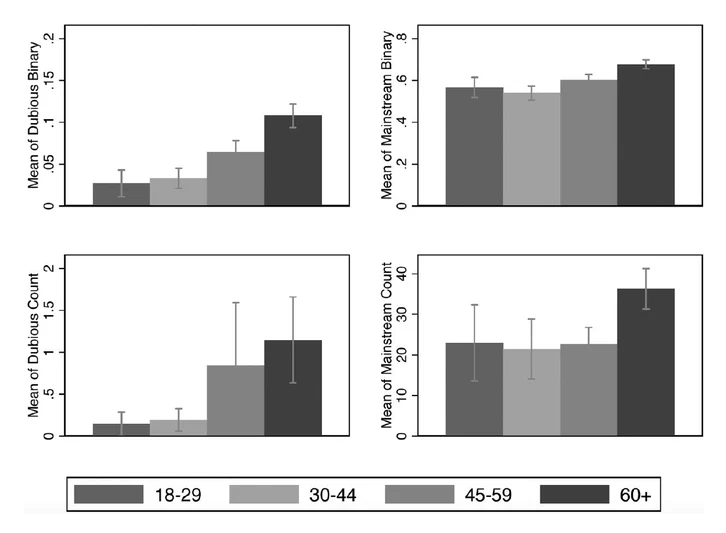
Partisanship and Older Americans' Engagement with Dubious Political News

Partisanship and Older Americans' Engagement with Dubious Political News

POQ · 2024

Investigates why older Americans disproportionately engage with dubious political news online. The study finds that partisan motivation plays a central role: older partisans are more likely to share and believe politically congenial misinformation, suggesting age differences in news engagement are driven by motivational factors rather than digital literacy alone.

Political Communication Public Opinion/Behavior American Politics
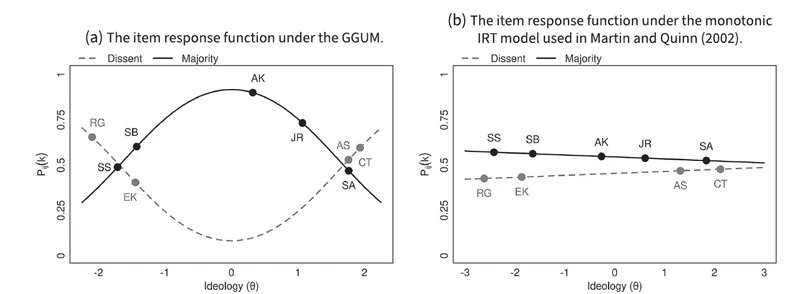
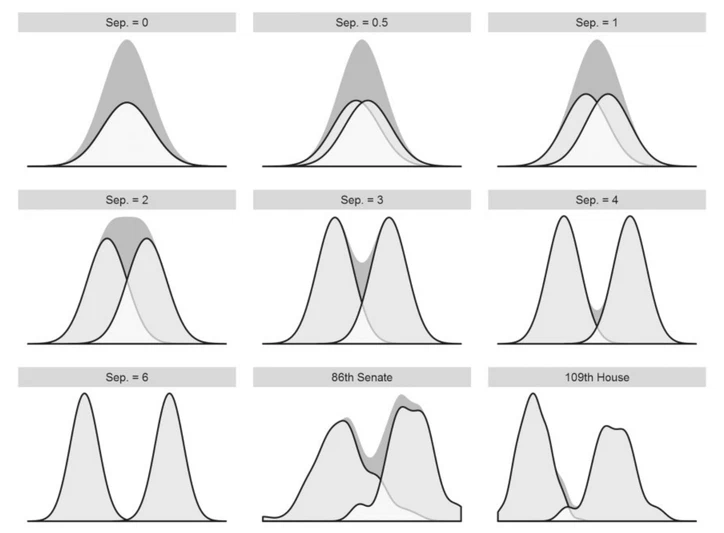
Ends Against the Middle: Measuring Latent Traits When Opposites Respond the Same Way for Antithetical Reasons

Ends Against the Middle: Measuring Latent Traits When Opposites Respond the Same Way for Antithetical Reasons

PA · 2023

Standard political measurement tools assume that people who give the same answer do so for the same reason — but what if a liberal and a conservative both vote “no” for completely opposite motivations? This paper introduces a new measurement model that can detect when ideological opposites converge on the same response for antithetical reasons, a pattern that breaks conventional scaling methods. Applied to Supreme Court voting, congressional roll calls, and survey data, the method outperforms standard approaches and comes packaged in a free, open-source R package. For anyone trying to measure where politicians or voters really stand, this offers a more honest reckoning with how political disagreement actually works.

Featured Bayesian Statistics Measurement/Surveys
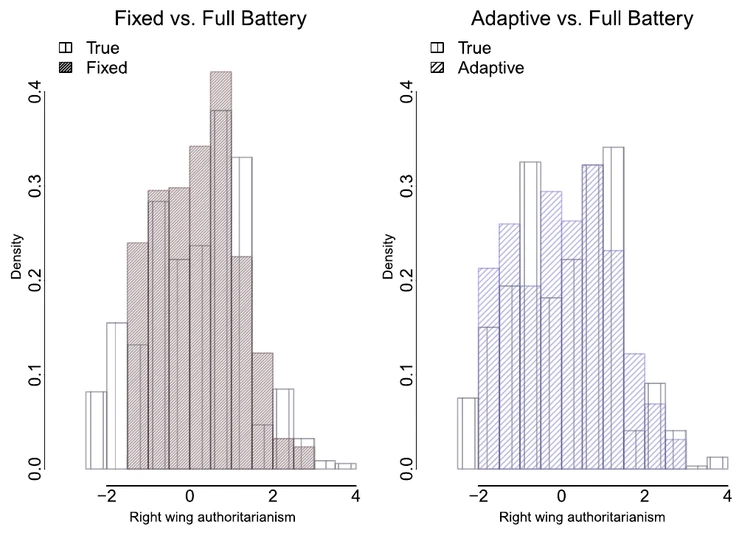
Adaptive Inventories: A Practical Guide for Applied Researchers

Adaptive Inventories: A Practical Guide for Applied Researchers

Cambridge University Press · 2022

Survey research has a fundamental tension: asking enough questions to measure something well versus not exhausting or losing respondents. This book introduces a smarter solution — computerized adaptive testing (CAT), a method that uses real-time statistical modeling to tailor each survey to the individual, asking only the questions that will be most informative given that person’s previous answers. The result is dramatically shorter surveys with no meaningful loss in measurement quality. Written as a practical guide for applied social scientists, the book is accompanied by the open-source R package catSurv.

Featured Bayesian Statistics Measurement/Surveys Public Opinion/Behavior
Closeness and Strategic Participation: Does the Closeness of the U.S. Presidential Election Shape Where College Students Register to Vote?

Closeness and Strategic Participation: Does the Closeness of the U.S. Presidential Election Shape Where College Students Register to Vote?

JOP · 2022

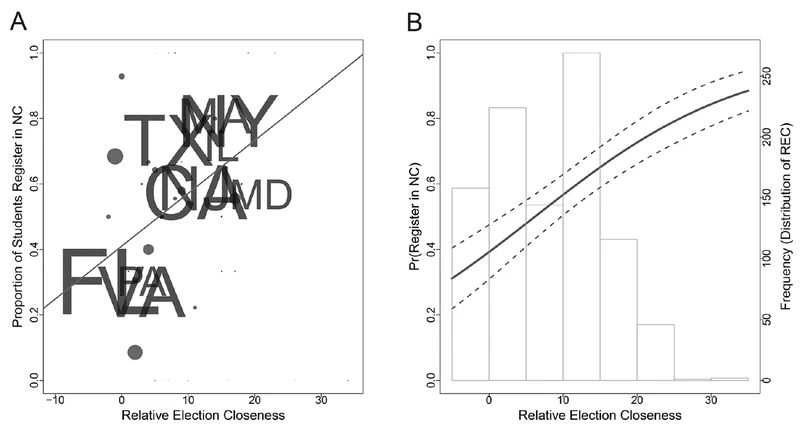
Investigates whether the perceived closeness of presidential elections influences where college students choose to register to vote. The study finds evidence of strategic registration behavior, with students more likely to register in competitive states when they perceive the election as close.

Featured Public Opinion/Behavior American Politics
Topics, Concepts, and Measurement: A Crowdsourced Procedure for Validating Topics as Measures

Topics, Concepts, and Measurement: A Crowdsourced Procedure for Validating Topics as Measures

PA · 2022

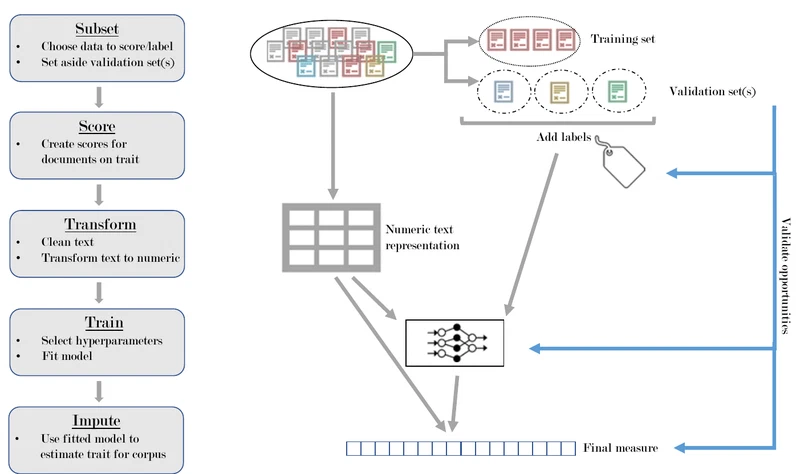
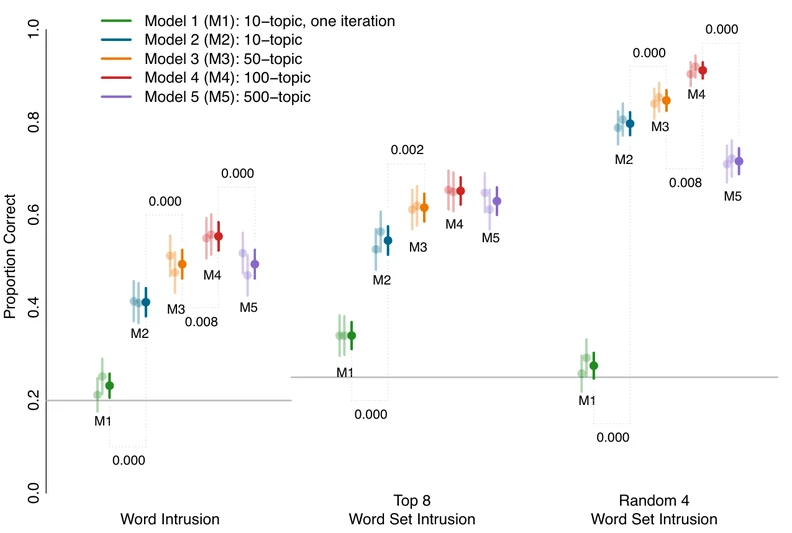
Topic models have become one of the most popular tools for analyzing political text at scale — but are researchers actually checking whether the topics they find measure what they claim? This paper surveys recent practice in top journals and finds that rigorous validation is increasingly rare, then proposes a practical crowdsourced fix: a suite of validation exercises using online workers to check whether topics are internally coherent and whether researcher-assigned labels actually match the content. The method comes with free software and is designed to raise the floor for measurement quality across the field, making it easier for researchers to catch problems before they become published conclusions.

Featured Measurement/Surveys Text/Image
Love and Anger in Global Party Politics: Facebook Reactions to Political Party Posts in 79 Democracies

Love and Anger in Global Party Politics: Facebook Reactions to Political Party Posts in 79 Democracies

JQD · 2021

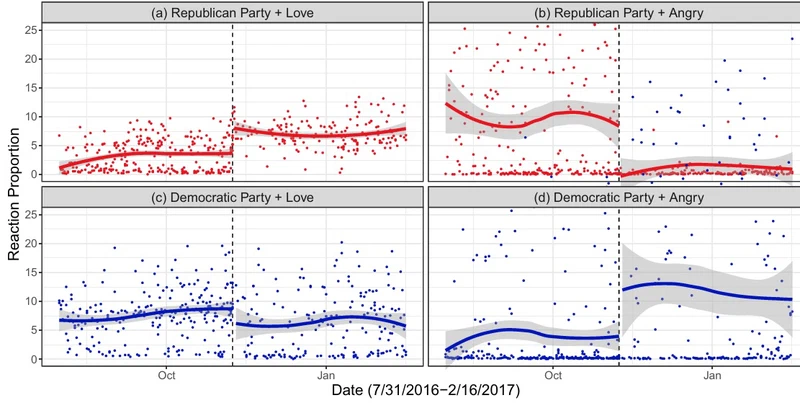
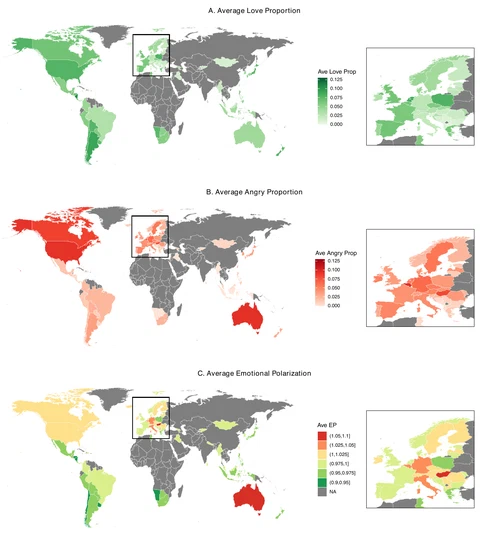
Analyzes Facebook emoji reactions to political party posts across 79 democracies to study emotional responses to partisan political communication. The study reveals systematic cross-national patterns in how citizens emotionally engage with parties, providing new insights into affective polarization and political communication at global scale.

Political Communication Public Opinion/Behavior
Overconfidence in News Judgments is Associated with False News Susceptibility

Overconfidence in News Judgments is Associated with False News Susceptibility

PNAS · 2021

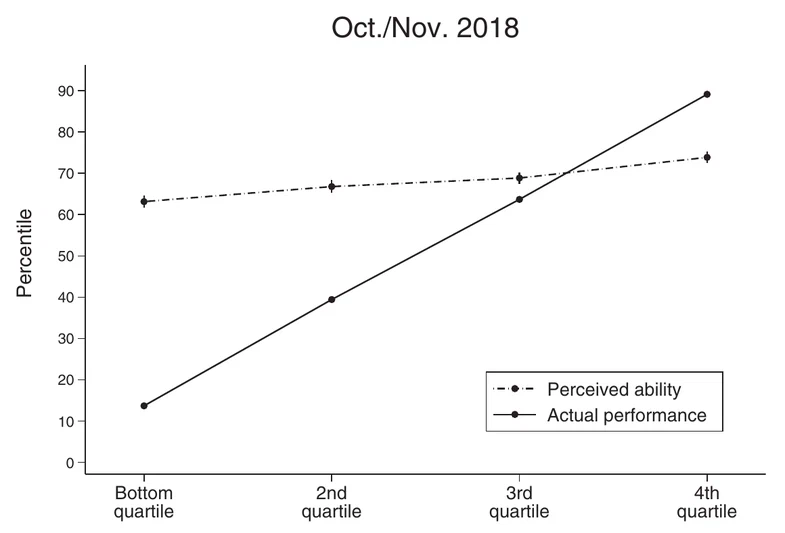
Most people think they’re pretty good at spotting fake news — but this paper shows that the gap between how good people think they are and how good they actually are is itself a major predictor of whether they fall for misinformation. Drawing on a large national sample, the study finds that overconfident news consumers are significantly more likely to perceive false headlines as accurate and to say they would share them, even after controlling for actual ability, political knowledge, and media use. The implication is pointed: interventions aimed at improving media literacy may need to tackle inflated self-assessments, not just build skills.

Featured Political Communication Public Opinion/Behavior
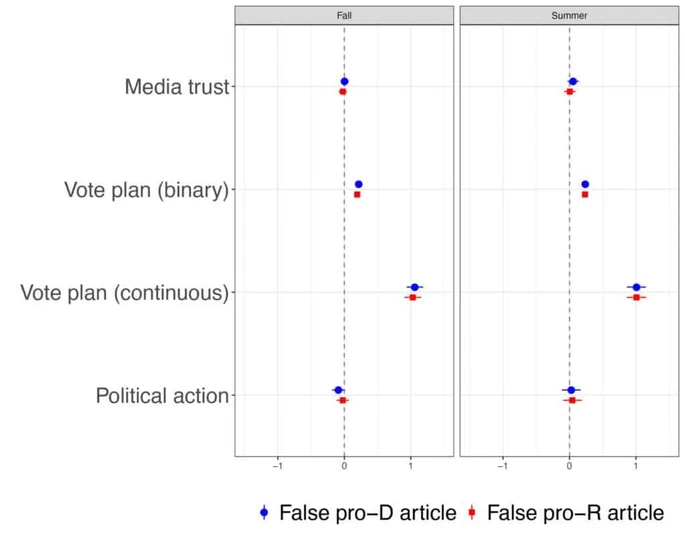
A Digital Media Literacy Intervention Increases Discernment Between Mainstream and False News in the United States and India

A Digital Media Literacy Intervention Increases Discernment Between Mainstream and False News in the United States and India

PNAS · 2020

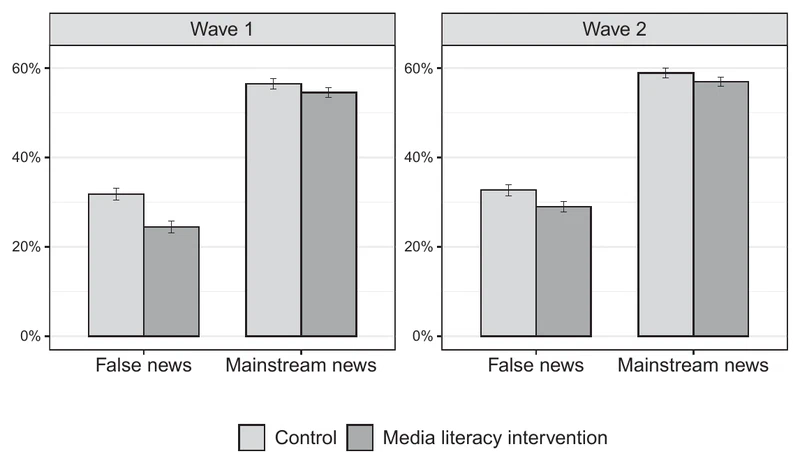
Can a short online video actually make people better at telling real news from fake? This paper tests a brief digital media literacy intervention across two very different countries — the United States and India — and finds that it meaningfully improves people’s ability to distinguish credible news sources from false ones, without making them broadly skeptical of all information. The effects held across partisan lines and in two distinct media environments. At a moment when misinformation travels fast and cheap, the finding that a scalable, low-cost nudge can move the needle on news discernment is genuinely encouraging.

Featured Political Communication Public Opinion/Behavior
Bayesian Model Selection, Model Comparison, and Model Averaging

Bayesian Model Selection, Model Comparison, and Model Averaging

SAGE Handbook of Research Methods in Political Science and International Relations · 2020

An invited handbook chapter providing a comprehensive overview of Bayesian approaches to model selection, comparison, and averaging for political scientists. Covers practical implementation and the theoretical foundations of Bayesian model uncertainty.

AI/Machine Learning Bayesian Statistics
GPIRT: A Gaussian Process Model for Item Response Theory

GPIRT: A Gaussian Process Model for Item Response Theory

UAI · 2020

Proposes GPIRT, a Gaussian process extension of item response theory that relaxes parametric assumptions about how respondents relate to latent traits. The model provides more flexible and accurate measurement of latent constructs from survey and test data.

Bayesian Statistics AI/Machine Learning Measurement/Surveys
Party Identification in the Age of Obama: Evidence on the Sources of Stability and Systematic Change in Party Identification from a Long-Term Panel Survey

Party Identification in the Age of Obama: Evidence on the Sources of Stability and Systematic Change in Party Identification from a Long-Term Panel Survey

PRQ · 2019

Uses long-term panel data spanning the Obama era to examine the sources of stability and change in party identification. The study finds that while party ID is generally stable, the Obama presidency produced systematic shifts among specific demographic groups, advancing understanding of when and why partisan attachments change.

Public Opinion/Behavior American Politics
How Conditioning on Post-Treatment Variables Can Ruin Your Experiment and What to Do About It

How Conditioning on Post-Treatment Variables Can Ruin Your Experiment and What to Do About It

AJPS · 2018

Randomized experiments are political science’s gold standard for causal inference — but a surprisingly common set of analytic choices can quietly destroy the advantage randomization provides. This paper documents that nearly half of experimental studies published in the field’s top journals condition on post-treatment variables, a practice that can bias results in any direction by any amount. With clear visual demonstrations and real-data re-analyses, the paper shows just how badly this can distort conclusions, then offers practical guidance for avoiding the trap. Essential reading for anyone who runs, reads, or reviews experimental research.

Featured Causal Inference Research Design
Tree-Based Models for Political Science Data

Tree-Based Models for Political Science Data

AJPS · 2018

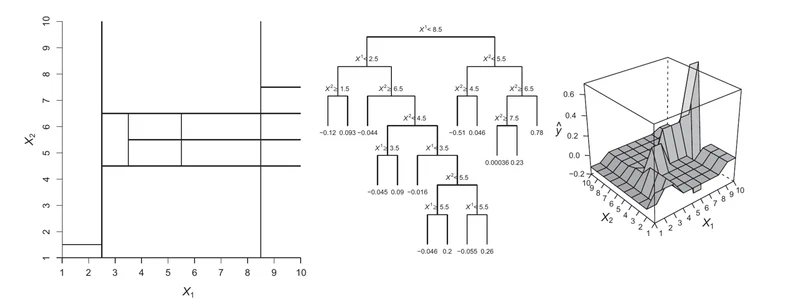
Political scientists are drowning in data — large surveys, social media, administrative records — but their standard statistical toolkit was built for a simpler world. This paper makes the case for tree-based machine learning methods (decision trees, random forests, and their relatives) as practical tools for political scientists dealing with high-dimensional data, complex interactions, and nonlinear relationships that regression simply can’t capture. Through simulations and real-data applications, the authors show when and why these methods outperform traditional approaches, while being honest about their limits for causal inference and theory testing.

Featured AI/Machine Learning
A Pairwise Comparison Framework for Fast, Flexible, and Reliable Human Coding of Political Texts

A Pairwise Comparison Framework for Fast, Flexible, and Reliable Human Coding of Political Texts

APSR · 2017

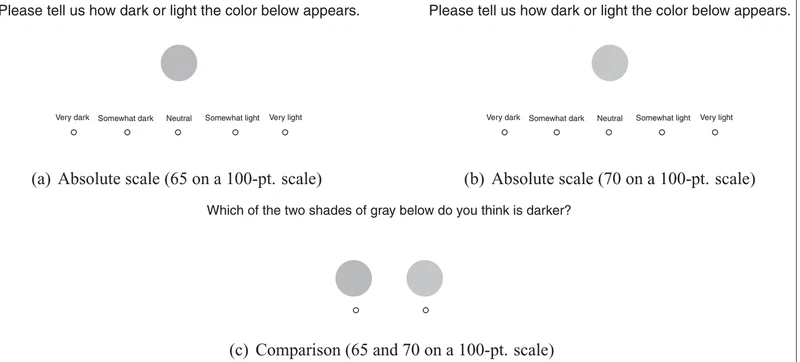
Content-coding political texts is one of the most labor-intensive tasks in the discipline — but what if you could reliably outsource thousands of judgments to online workers without sacrificing quality? This paper introduces a crowdsourced platform that sidesteps the unreliability of traditional coding scales by asking workers to make simple pairwise comparisons (“which of these two ads is more negative?”) rather than absolute judgments. Validated on Senate campaign ads and State Department human rights reports, the method matches or outperforms expert coders at a fraction of the cost and comes with free R software.

Featured Text/Image Political Communication
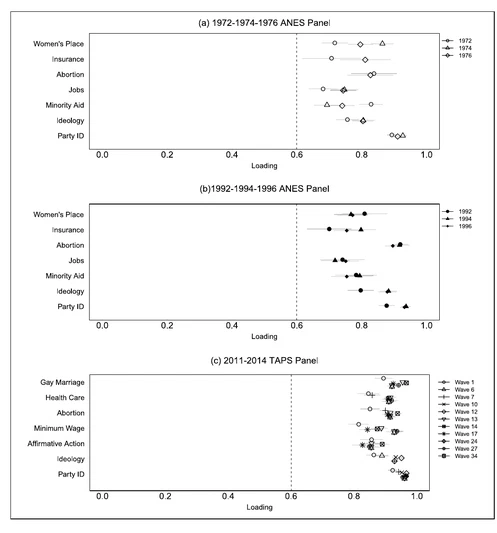
Static Stability and Evolving Constraint: Preference Stability and Ideological Structure in the Mass Public

Static Stability and Evolving Constraint: Preference Stability and Ideological Structure in the Mass Public

APR · 2016

Investigates the stability of individual policy preferences and ideological constraint over time. The findings challenge assumptions about mass ideological consistency, showing that while individual preferences can be stable, the structure of constraint evolves in ways inconsistent with elite-driven models. This paper received the Hahn-Sigelman Prize from the journal.

Public Opinion/Behavior Measurement/Surveys American Politics
An Informed Forensics Approach to Detecting Vote Irregularities

An Informed Forensics Approach to Detecting Vote Irregularities

PA · 2015

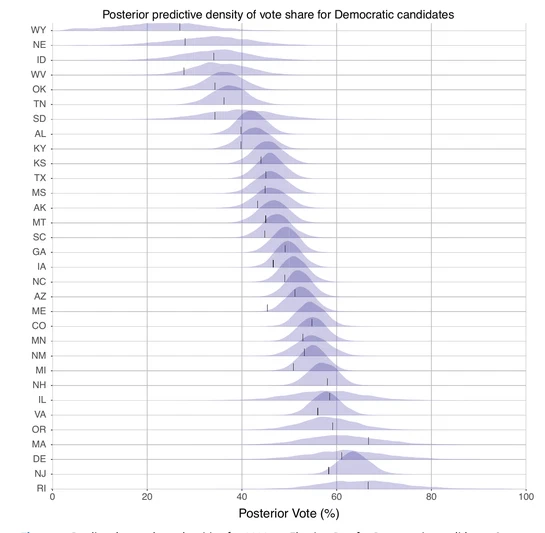
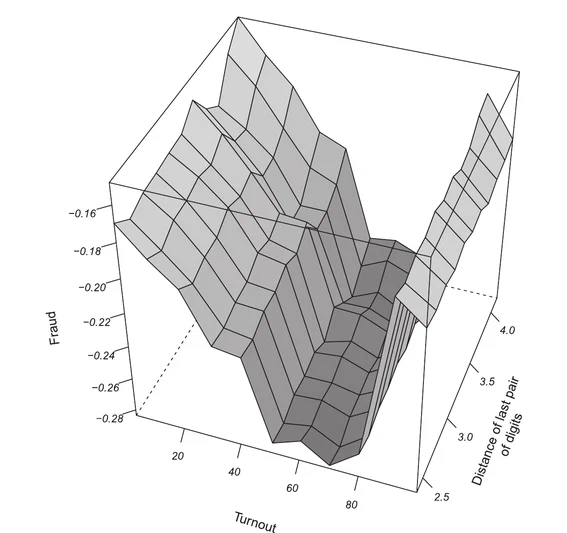
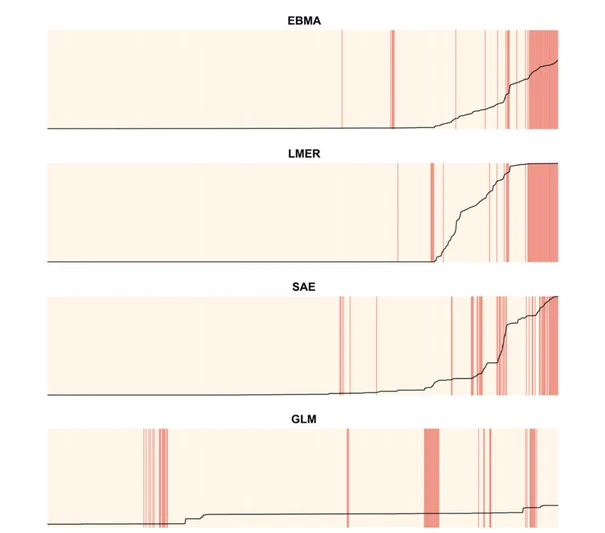
Develops a statistically principled approach to detecting electoral fraud using forensic analysis of vote return distributions. By incorporating prior knowledge about legitimate electoral patterns, the method improves detection of irregularities while reducing false positives compared to naive approaches.

AI/Machine Learning Bayesian Statistics Measurement/Surveys Public Opinion/Behavior
Connecting the Candidates: Consultant Networks and the Diffusion of Campaign Strategy in American Congressional Elections

Connecting the Candidates: Consultant Networks and the Diffusion of Campaign Strategy in American Congressional Elections

AJPS · 2015

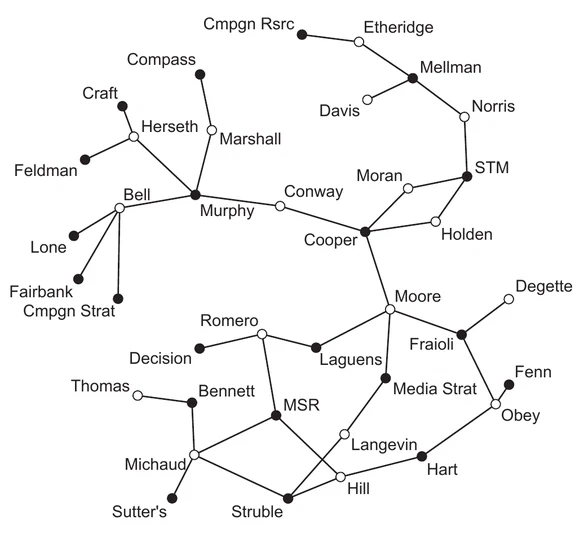
Examines how political consultant networks facilitate the diffusion of campaign strategies across congressional elections. By mapping consultant ties between campaigns, the study shows that shared consultants transmit tactical innovations, explaining why similar campaign practices spread rapidly across the political system.

Featured Political Communication Public Opinion/Behavior American Politics
Aggregation and Ensembles: Principled Combinations of Data

Aggregation and Ensembles: Principled Combinations of Data

PS · 2013

A brief methodological contribution outlining principled approaches to combining data from multiple sources through ensemble and aggregation methods. Argues for a coherent Bayesian framework for data fusion in political forecasting and social science research.

AI/Machine Learning Bayesian Statistics
Computerized Adaptive Testing for Public Opinion Surveys

Computerized Adaptive Testing for Public Opinion Surveys

PA · 2013

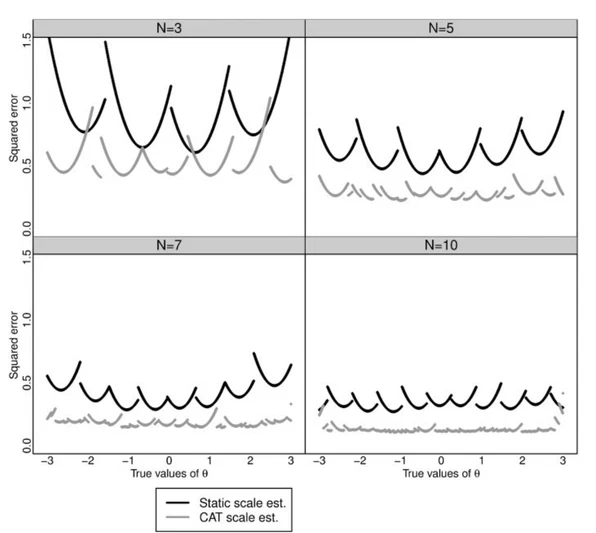
Introduces computerized adaptive testing (CAT) methods to public opinion surveys, allowing researchers to measure latent attitudes more efficiently. By tailoring question selection to respondents in real time, CAT can achieve the same measurement precision with far fewer questions than traditional fixed-form surveys.

Bayesian Statistics Measurement/Surveys Public Opinion/Behavior
Why John Aldrich?

Why John Aldrich?

PS · 2013

A tribute and scholarly assessment of John Aldrich’s contributions to political science, examining the scope and influence of his work on parties, voting, and political behavior.

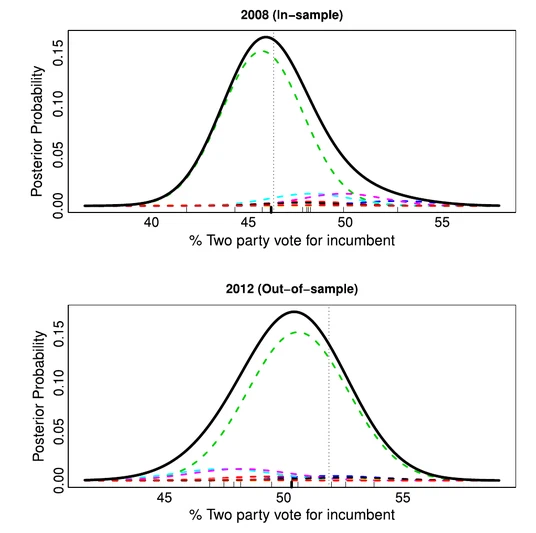
Ensemble Predictions of the 2012 US Presidential Election

Ensemble Predictions of the 2012 US Presidential Election

PS · 2012

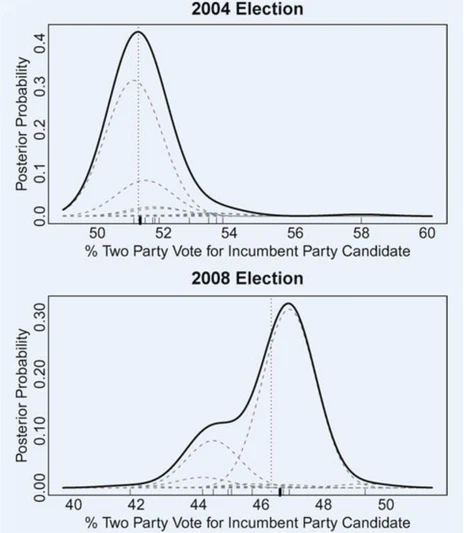
Applies ensemble forecasting methods to predict the outcome of the 2012 US presidential election. Demonstrates the practical utility of combining multiple models, with the ensemble approach providing well-calibrated predictions ahead of election day.

AI/Machine Learning Bayesian Statistics Public Opinion/Behavior American Politics
Turnout as a Habit

Turnout as a Habit

PB · 2011

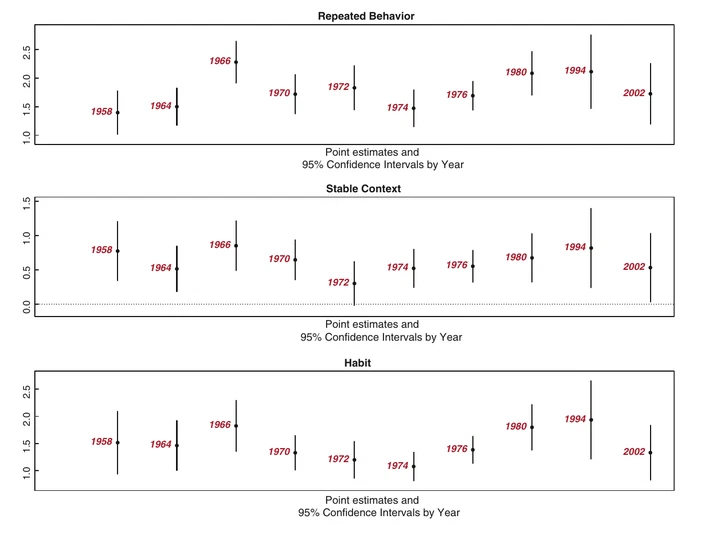
Investigates whether voting is habitual behavior that persists over time. Using panel data, the authors find strong evidence that past voting behavior predicts future turnout independent of other factors, suggesting that civic participation becomes self-reinforcing once established.

Public Opinion/Behavior American Politics
Bayesian Model Averaging: Theoretical Developments and Practical Applications

Bayesian Model Averaging: Theoretical Developments and Practical Applications

PA · 2010

Provides a theoretical and practical introduction to Bayesian model averaging for political scientists. The paper shows how BMA improves out-of-sample prediction and addresses model uncertainty compared to standard model selection approaches, with applications to forecasting and causal inference.

AI/Machine Learning Bayesian Statistics
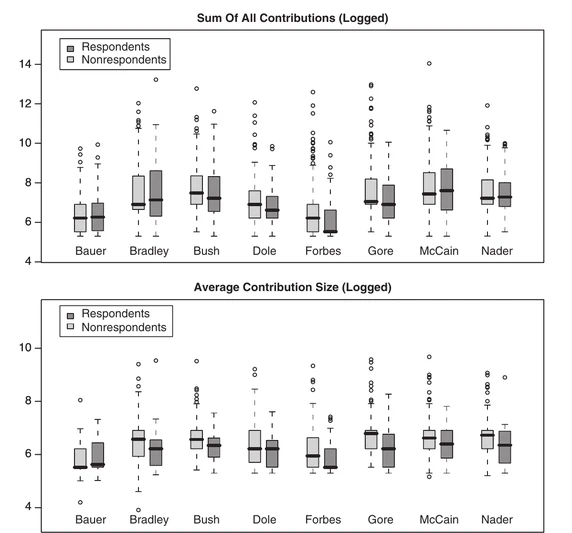
Nonresponse Bias on Dimensions of Political Activity Amongst Political Elites

Nonresponse Bias on Dimensions of Political Activity Amongst Political Elites

IJPOR · 2008

Investigates nonresponse bias in surveys of political elites across multiple dimensions of political activity. The study provides methodological guidance for researchers concerned about whether elite survey nonresponse distorts inferences about the political behavior and attitudes of officeholders and candidates.

Measurement/Surveys American Politics
Citations for Published Work
(2023). Inferring Time-varying Treatment Effects in Panel Data via Multi-Task Gaussian Processes. Proceedings of the 26th International Conference on Artificial Intelligence and Statistics (AIStats).
(2020). Bayesian Model Selection, Model Comparison, and Model Averaging. SAGE Handbook of Research Methods in Political Science and International Relations.
(2020). GPIRT: A Gaussian Process Model for Item Response Theory. Proceedings of the 36th Conference on Uncertainty in Artificial Intelligence (UAI).
(2013). Why John Aldrich?. PS: Political Science and Politics, 46(4), 857-864.
(2011). Turnout as a Habit. Political Behavior, 33(4), 535-563.